
Why Most Casino Players Lose (And How the Smart 10% Don't)
Let me guess: you've heard that the house always wins, you've nodded along, and then you've still gone and deposited an extra fifty because your favorite slot felt "due." Don't worry — you're in good company. The uncomfortable truth about iGaming is that the maths doesn't care how you feel about that bonus round. But here's the part most articles skip: losing less isn't about luck or a secret setting on your slot machine. It's about understanding a handful of concepts that the casual player never bothers to learn.
After years of watching bankrolls rise and fall (mostly fall), here's what actually separates a player who drinks free cocktails on a $200 buy-in for six hours from the one who torches four figures in twenty minutes.
The House Edge Is Not a Suggestion
Every game you play has a built-in tax. That tax is called the house edge, and it's the single most important number in iGaming. It's not a random annoyance — it's the mathematical reason casinos exist, and understanding it is the fastest way to stop making terrible decisions.
Let's put real numbers to it:
- Blackjack (basic strategy): roughly 0.5% house edge. Best odds on the floor.
- Baccarat (banker bet): about 1.06%. Boring, sure, but brutally efficient.
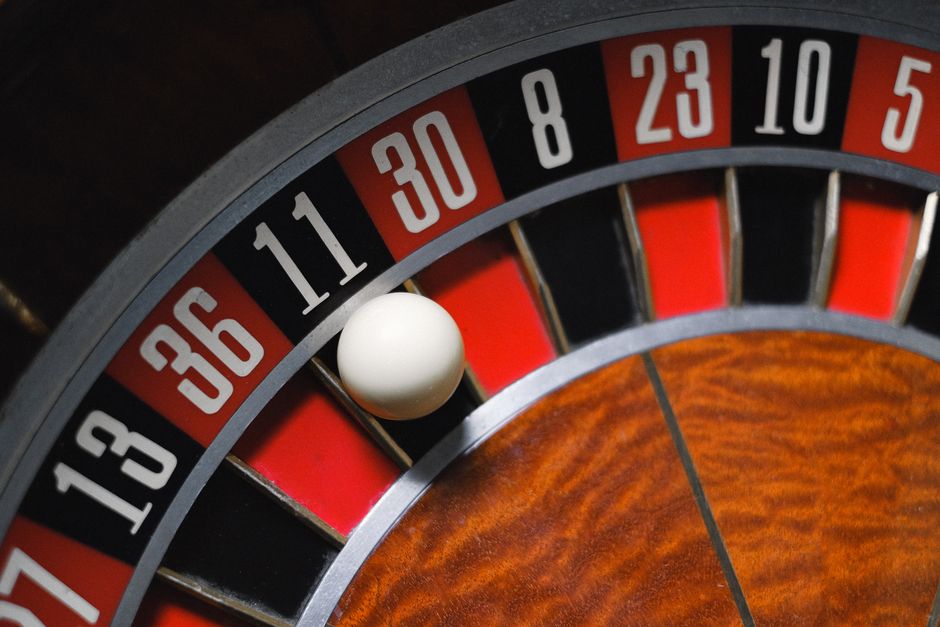
- European roulette: 2.7%. Single-zero wheel, always.
- Slots: typically 2% to 10%, and online slots often sit toward the lower end — but volatility can still shred you.
- Keno and specialty bets: often 25%+. Avoid.
The kicker: a 5% house edge doesn't mean you lose 5% per session. It means that over thousands of hands or spins, the casino keeps 5% of everything wagered. In a short session, variance is a far bigger factor. Over a long one, the edge is a certainty. This is why you can win for an hour and still be playing a losing game.
Bankroll Management Is Boring and It Wins
Nobody wants to hear this. Everybody needs to. Before you touch a slot, a table, or a poker room, decide on a number you can afford to lose entirely — the money you would not miss if it vanished today. That's your bankroll. Not your rent. Not your emergency fund. Not your kid's tuition.
Once you have that number, follow a rule that smart players use religiously: More background can be found at สล็อตเว็บตรง.
- Split your bankroll into session chunks. If you have $300, treat each $50 as a separate session.
- Set a stop-loss. When a session chunk is gone, you're done. Walk away. The table will still be there tomorrow.
- Set a win goal. If you double your session chunk, cash out the original and play with house money. It's psychological, but it works.
- Never chase. Rebuying after a stop-loss is how $50 becomes $500.
The pros don't win because they're lucky. They win because they lose slowly and quit while they're behind.
Slots: Volatility, RTP and the Myth of the "Hot" Machine
Slots are the bread and butter of online casinos — and the game most players understand least. Two numbers matter more than any theme or jackpot animation: RTP and volatility.
RTP (Return to Player) is the theoretical percentage a slot pays back over millions of spins. A 96% RTP slot returns $96 for every $100 wagered across that massive sample. That's the same 4% edge we talked about, dressed up in neon. Most reputable online slots sit between 94% and 97%. Always check before you spin — some cheap clones hide 90% RTPs.
Volatility describes how the slot delivers those returns. Low volatility = frequent small wins, slow drain. High volatility = long dry spells punctuated by huge hits. Neither is better, but they demand different bankrolls. Playing a high-volatility slot with a ten-dollar balance is like taking a spoon to a gunfight.
And no — the machine is not "due." Online slots use RNGs (random number generators) that have no memory. A slot that hasn't paid in 200 spins is exactly as likely to pay on spin 201 as it was on spin one. The only thing you control is which slot you sit at and how long you stay.
Poker Is the One Game Where You Can Actually Have an Edge
Here's the secret the casino doesn't advertise: in poker, you're not playing the house. You're playing other humans. The casino just takes a rake and steps aside. That means skill matters — genuinely, measurably — and a disciplined player can be profitable over time.
But the edge only appears if you put in the work:
- Learn ranges, not hands. Stop thinking "I play ace-king." Think "I open from this position with this entire range, and I fold everything else."
- Play in position. Acting last is a mathematical advantage. Exploit it relentlessly.
- Track your results. If you've played 5,000 hands and you're down, that's not variance — that's a leak.
- Ignore the ego. The guy who calls a three-bet with 7-2 offsuit because "he had a feeling" is your retirement fund.
Poker rewards patience and punishes ego more than any other casino game. If you treat it like gambling rather than a craft, it will treat you the same way blackjack treats a drunk tourist.
Bonuses, Promos and the Fine Print Nobody Reads
Welcome bonuses are marketing, not charity. That $500 match bonus comes with wagering requirements — often 30x or 40x the bonus amount. Do the maths before you celebrate. A $100 bonus at 35x wagering means you'll need to wager $3,500 before withdrawing a cent. On a 96% RTP slot, that's an expected loss of $140. The bonus is now negative value.
Look for these instead: low wagering requirements (under 20x), no-max-cashout terms, and reloads on games you actually play. And read the terms page. Boring? Absolutely. Cheaper than learning the hard way? Always.
Final Thought: Play Like You're Going to Lose, and You Might Not
The players who last aren't the ones chasing jackpots. They're the ones who understand the maths, respect the edge, and treat their bankroll like a budget rather than a hope. They play lower stakes longer, they quit when the plan says quit, and they never let a losing streak convince them that the next spin is different. It isn't. But your decisions can be — and that's the only real edge a casual player has.
